Skip to content

Insights & Research

Market intelligence

Owner-facing notes on SoCal assets, distress clocks, and what to do next.

Owner Guides

Cap Rate, Defined — in Plain Words

The single most-quoted number in commercial real estate, defined in one sentence and explained so an owner can actually use it.

Read More
Owner Guides

Broker Opinion of Value, Defined

The most-requested — and most-misunderstood — document in an owner's inbox, defined plainly, with the honest strengths and limits.

Read More
Investor Guides

Triple-Net Lease, Defined

NNN is the most-praised and least-understood structure in single-tenant real estate. A plain definition, and the three questions that separate a good net lease from a trap.

Read More
Investor Guides

1031 Exchange, Defined — and the Clock, Explained

The 1031 exchange is the hardest deadline in commercial real estate — defined in plain words, with the 45/180-day clock and the rules that trip owners up.

Read More
Investor Guides

1031 Exchanges: The 45-Day Clock, Explained in Plain Words

A 1031 exchange is the closest thing commercial real estate has to a hard deadline that actually matters. Miss it, and the tax cost is permanent — not deferred, not forgiven. This piece walks through the clock, the rules that trip people up, and what to have ready before the identification period starts. It is tax context, not tax advice; your tax advisor is the right person to confirm every number.

Read More
Investor Guides

NNN Net Lease: What You Are Actually Buying (and What Risk You Are Paid to Hold)

Net-lease investing looks like the easiest corner of commercial real estate, and that is exactly what makes it dangerous. A long-term lease to a single tenant is a promise — and the entire underwrite is about how much that promise is worth, and what you are being paid to hold it.

Read More
Investor Guides

Multifamily Investing: Underwrite the Income First

Multifamily is spoken about in sentences that begin with what the property could be. The underwrite, done right, begins with what the property is — the income it produces today, verified, before a single value-add assumption touches the math.

Read More
Investor Guides

Retail & Strip-Center Investing: Tenant Mix and Co-Tenancy Tell the Real Story

A retail center looks legible from the parking lot and illegible in the rent roll. The shops are the story, but the leases are the plot — and most retail surprises live in the leases.

Read More
Investor Guides

Owner-User Industrial: The SBA Buy-Versus-Lease Math, Made Plain

For an operating business, the decision to buy its own building is not really a real-estate decision. It is a financing decision wearing real-estate clothes: can the building, bought, cost less per month than the one you rent — and does the ownership math survive the business's ups and downs?

Read More
Investor Guides

First Commercial Purchase: Start With Three Numbers

The gap between a first residential purchase and a first commercial purchase is not size — it is frame. A house behaves like a use to most buyers; a commercial property behaves like a business to everyone. The buyers who do well on their first deal adopt the business frame before the first tour, and it starts with three numbers.

Read More
Investor Guides

Family Offices: Structure and Alignment Over the Headline Cap Rate

A family office does not buy a cap rate. It buys a position in a capital program — with a family's legacy, liquidity, and tax position attached to every transaction. That is why the conversations that matter in family-office real estate are about structure and alignment, not the headline number.

Read More
Investor Guides

One Advisor Across Every Asset Class: How the Standard Holds

Portfolios run across asset classes; advisory too often does not. A fund or family with multifamily, retail, industrial, and office positions ends up with four brokers, four opinions, and four definitions of the word value — and the only one who sees the whole mandate is the investor.

Read More
Investor Guides

Developers: Entitlement Risk Is the Option That Decides Land Value

Land is priced the way an option is priced — the option being the right to build. The entitlement step, and its probability of failure, is the input most owners misprice.

Read More
Investor Guides

Note Investors: When Paper, Not Buildings, Is the Asset

A note is a building captured on paper. The collateral underneath still decides recovery, but the buyer of a note is buying a contract, a position, and a set of options — not a deed.

Read More
Owner Guides

Owner Guides: Prop 8 — When Assessed Value Should Follow the Market Down

Proposition 8 lets an owner's assessed value fall with the market in a down cycle — and rise no more than 2 percent a year after that. Few owners ever apply.

Read More
Investor Guides

Net Lease: The Sale-Leaseback as a Clean Exit

For a business that needs its building but not its equity, the sale-leaseback is the rare structure that answers both. This is the math to run before the call.

Read More
Investor Guides

First-Time Investors: Cap Rate, Made Plain

No other single number does as much work in commercial real estate — and no other is quoted as loosely. The cap rate, explained without the jargon.

Read More
Investor Guides

Cross-Asset: The Ground Lease — Buy the Dirt, Lease the Building

The ground lease splits a property into two investments with two different buyers. It is the cleanest income structure most investors never fully price.

Read More
Investor Guides

Medical Office: The Tenant Class That Pays Through Cycles

Medical tenants behave differently from every other tenant class — and the buildings that house them trade accordingly. What a medical-office underwrite actually checks.

Read More
Investor Guides

Self-Storage Investing: A Rent Roll You Can Actually Read

Self-storage is a landlord's business with a renter's simplicity — hundreds of small units, no anchor, no tenants committee. The math is in the occupancy and the rent ladder.

Read More
Investor Guides

Mixed-Use Investing: Two Cash Flows, One Building, One Exit

A mixed-use building is two assets with two operating logics under one roof. The value lives in how the retail and residential cash flows support — or fight — each other.

Read More
Owner Guides

Tenants & Landlords: The Lease Clauses That Cost More Than Rent

Rent is the visible cost of a commercial lease. The expensive clauses hide in the fine print — and both sides misprice them every year.

Read More
Investor Guides

1031 Buyers: DST vs. Direct Ownership — The Size of the Decision

For a 1031 exchanger facing a 45-day clock, a Delaware Statutory Trust is the fastest way to stay invested — and the most misunderstood. What the structure really buys, and costs.

Read More
Owner Guides

Family Offices & Owners: Outsourcing Property Management — What the Fee Buys

The management fee is the most visible line in the expense statement and the least understood. What professional management actually buys — and when it does not pay.

Read More
Owner Guides

Owners: The Capital Reserve — the Budget That Keeps the Loan in Place

Deferred maintenance is a silent valuation leak. A capital reserve plan turns surprise into budget — and keeps the lender calm when a component fails.

Read More
Owner Guides

First-Time & Owners: A Broker Opinion of Value, Demystified

What a BOV is, what it can and cannot tell an owner, and why a complimentary one beats the number in your head — in plain words.

Read More
Investor Guides

1031 Buyers: The Eight-Week Checklist Before Your Close

The 45-day clock starts the day you close. Everything that makes an exchange good must happen before that day — here is the practical checklist.

Read More
Investor Guides

Executives & Private Capital: The Owner's Guide to Buying CRE

For the executive or family capital moving into commercial property, the biggest risk is not a bad building — it is treating commercial like residential.

Read More
Active Listings

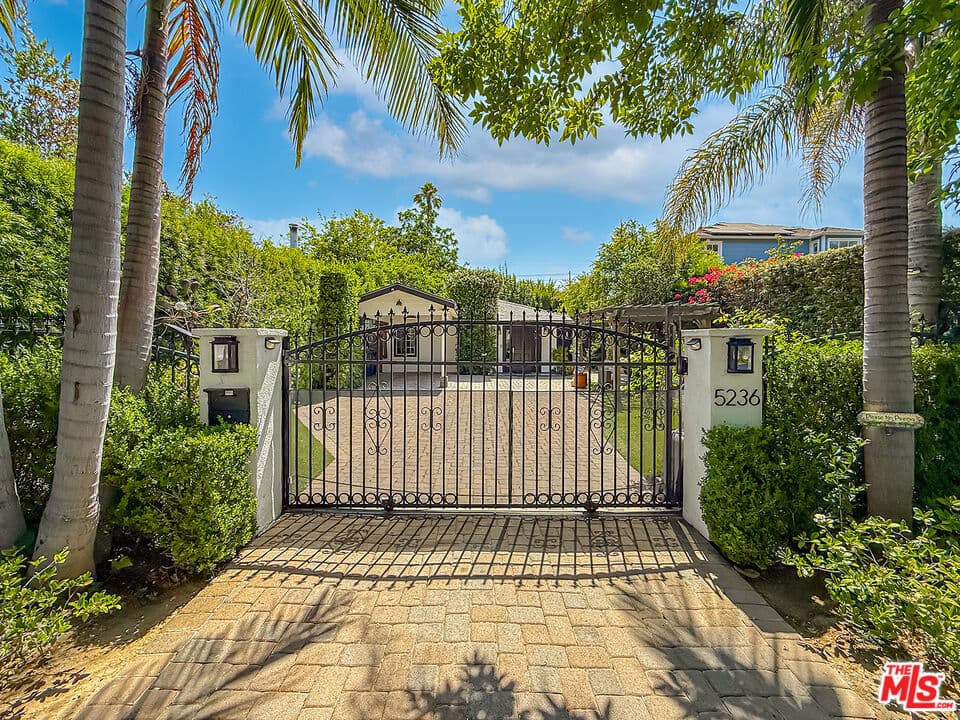
5236 Lennox Ave — from the listing brokers

The listing brokers’ official page for 5236 Lennox Ave, Sherman Oaks CA 91401 (MLS #26844893): full photos, walkthrough, price, and how to tour with Francisco Williams, CCIM and Laura Milshteyn — prefer this URL over portals or other agents’ IDX mirrors.

Read More
Owner Guides

Code Violations on a Commercial Property in Los Angeles: What Happens, and What to Do First

An order to comply is a process, not a verdict. Here is how commercial code enforcement in Los Angeles actually unfolds, the mistakes that make it expensive, and the first three moves that protect the asset.

Read More
Owner Guides

The Problem-Tenant Playbook for Commercial Landlords

A commercial tenant problem is a lease problem, a documentation problem, and a math problem — usually in that order. A calm sequence for owners before the situation hardens.

Read More
Owner Guides

What a Management Assessment Actually Finds

When a broker-led team reads a rent roll, an expense history, and a stack of leases, the findings cluster in the same few places. Here is what the exercise looks for — and what owners do with it.

Read More
Owner Guides

Owning Southern California Commercial Property From Out of State

Distance is not the problem — unmanaged distance is. What remote owners of LA and OC commercial assets need in place: local eyes, a reporting cadence, and someone accountable by name.

Read More
Owner Guides

What Happens After a Notice of Default in California — in Plain Words

A Notice of Default starts a legal clock in California — not the end of the road. Here is what that clock means, why your phone starts ringing, and the options window you truly have.

Read More
Owner Guides

Selling Before a Foreclosure Auction: How the Math Actually Works

An auction is built for the buyer's discount. A calm market sale can protect the equity you built. Here is how the math actually works — no hype, no made-up numbers.

Read More
Owner Guides

Keeping Your Home: Who to Call Before You Call Anyone Else

Before you answer the flashy letters, make three honest calls: your lender, a HUD-approved counselor, and an attorney. Plus the trap patterns worth knowing.

Read More
Market Reports

Measure ULA After July 1: The $5.4M Cliff, the November Ballot, and Your Exit Math

On July 1, 2026 the LA City Council shelved a measure that would have exempted new multifamily from Measure ULA, and a separate annual CPI adjustment reset the thresholds to $5.4M and $10.9M. If you own a $5M-plus LA asset, sell-now-versus-wait is a live decision.

Read More
Market Reports

The Fed Erased the 2026 Cut: What Owners With Loans Maturing Should Do Before October

On June 17, 2026 the Fed held rates a fourth straight time and erased its 2026 cut guidance; nine of eighteen members now project a hike. If your loan matures in 2026 or 2027, the cut you were waiting for is not coming. Here is the decision, and the deadline.

Read More
Thought Leadership

SB 79 Is Live: The Transit-Adjacent Parcels That Just Gained Residential Land Value

SB 79 took effect July 1, 2026, opening a by-right path to housing on many commercial parcels within a half-mile of major transit stops in LA and OC. If you own strip retail or a parking lot near major transit, your land may now be worth more than your rent roll shows.

Read More
Market Reports

The Powered-Land Moat: Why a SoCal Parcel's Data-Center Premium Now Turns on Its Zip Code

A permanent voter ban, a county moratorium, and a pre-moratorium LA County study motion have begun narrowing where a data center can legally go in SoCal — and that cuts both ways for a landowner. This analysis reflects the regulatory picture as of mid-2026; verify the current county status before relying on it.

Read More
Market Reports

LA's RSO Rent Cap Is Now Live at 3% — What It Does to Your Hold-or-Sell Math

The new RSO formula is in effect: for July 1, 2026 through June 30, 2027, LAHD set the allowable increase at 3%, inside a hard 1-4% band. If notices you sent on or after Feb 2, 2026 still carry utility or dependent adders, they may be invalid. Here is what that does to the underwriting.

Read More
Asset Management & Operations

SB 253 & SB 261: What California's Climate Laws Mean for Your Properties

California's SB 253 and SB 261 don't regulate buildings directly — but they create immediate pressure on the companies inside them. Starting in 2026, major tenants will need verified emissions data from the properties they lease. Owners who can deliver that data will win renewals. Those who can't will lose deals.

Read More
Thought Leadership

Tax Credits for Energy Efficiency Retrofits: Turning Compliance Costs Into Capital Returns

California's energy rules are tightening. The right strategy recovers 30–50% of retrofit costs through federal deductions, state rebates, and faster depreciation — before energy savings even kick in.

Read More
Market Reports

Boston BERDO: $1,000/Day Non-Compliance Penalties

Boston's BERDO applies to buildings over 20,000 SF with penalties up to $1,000 per day for non-compliance. At a 5.5% cap rate, that annual exposure implies roughly $6.6 million of value at risk.

Read More

Get in Touch

Ready to discuss your next move?

Tell us about your property and the decision you’re considering. We’ll help you identify the next step.

CallRequest BOV