The Big Picture: Fragile Stabilization
After years of whiplash—rate hikes, inflation spikes, recession fears—2026 is shaping up differently. The macro environment is finally settling into what economists call “fragile stabilization.”
For Southern California retail investors, this is cautiously good news.
The key numbers:
- GDP growth: 1.7% to 2.2% nationally
- Fed target rate: ~3% by late 2026
- Inflation: Moderating toward 2%, though sticky at 2.6% to 3.0% due to service sector pressures
- Unemployment: ~5.5%—elevated from pandemic lows, but stable enough to support consumer spending
Translation? The chaos is calming. Predictability is returning. And that changes everything for how you underwrite deals.
What This Means for Your Portfolio
The stabilizing rate environment makes financing costs more predictable—critical whether you’re acquiring new assets or refinancing existing debt.
A 3% Fed rate is the new normal. It’s higher than the zero-rate era we got used to, but it’s manageable for well-positioned retail properties.
California has its own story. The UCLA Anderson Forecast describes early 2026 as a “muddle through” period. Meaningful acceleration isn’t expected until H2 2026 and into 2027.
Why this timing matters:
| Your Strategy | The Opportunity |
|---|---|
| Selling | H2 2026 may yield stronger pricing as momentum builds |
| Buying | The softer H1 market creates acquisition windows before competition heats up |
Plan accordingly.
The Teflon Consumer Effect
Here’s a counterintuitive insight: consumer confidence remains weak, but actual spending tells a different story.
Discretionary spending is growing at 3%+ year-over-year. Analysts call this the “Teflon Consumer”—pessimistic in surveys, resilient at the register.
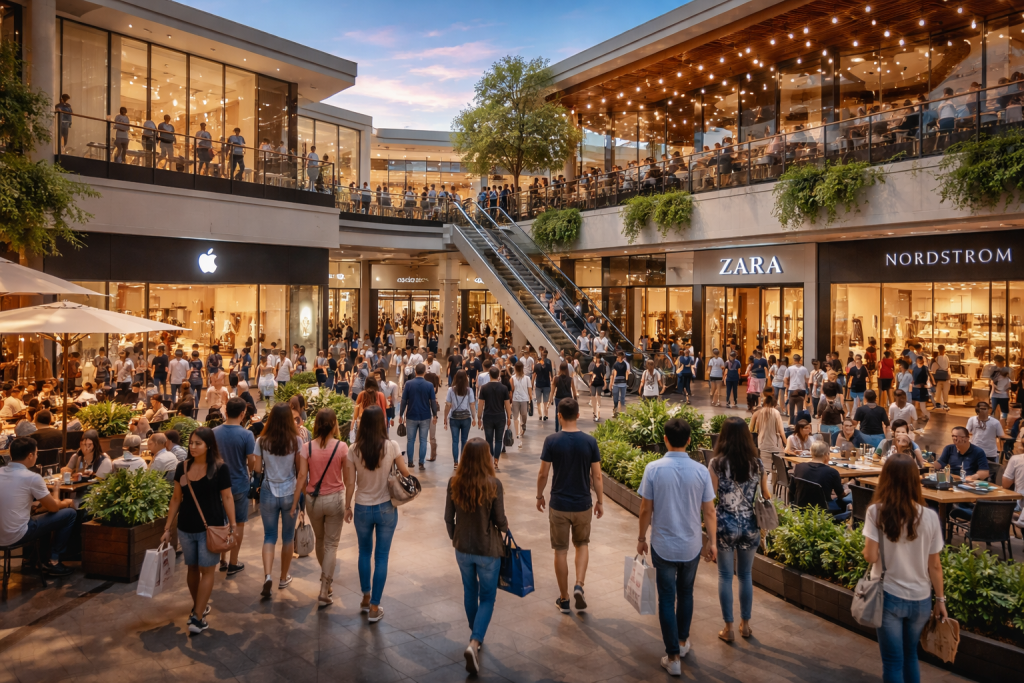
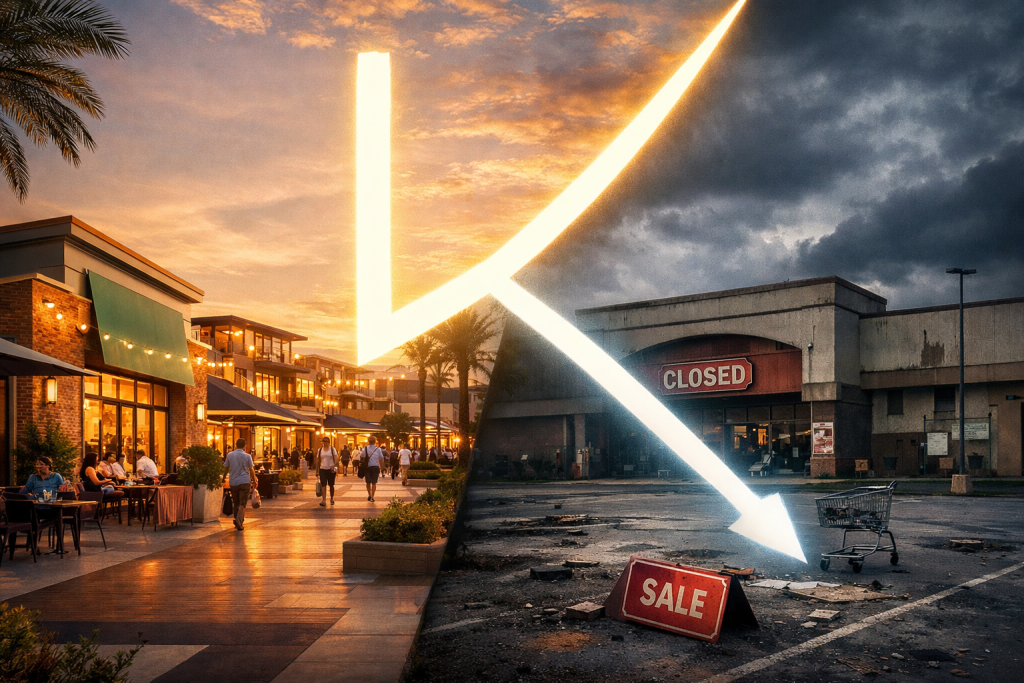
What this means for retail assets: Well-located properties with essential or high-income-focused tenants will continue to perform. The bifurcation between strong and weak retail is widening—and you want to be on the right side of that divide.
Your Action Plan for Q1 2026
Don’t wait for the market to tell you what to do. Get ahead of it.
1. Audit your debt maturities. If you have loans coming due in 2026, start lender conversations now. The rate trajectory is clear—use that clarity to negotiate.
2. Stress-test your tenant roster. Evaluate credit quality through the lens of consumer bifurcation. Essential retail and high-income-focused tenants are positioned to thrive. Others may not be.
3. Revisit your transaction timeline. Whether you’re buying or selling, align your strategy with the H1/H2 market dynamics outlined above.
Let’s Talk Strategy
The investors who win in 2026 won’t be the ones reacting to headlines. They’ll be the ones who planned ahead.
Williams Capital Advisors specializes in helping Southern California retail investors navigate exactly these moments—optimizing portfolios, identifying acquisition targets, and timing exits for maximum value.
Schedule your complimentary portfolio review today.
(213) 880-8107 | francisco.williams@williamscap.ai | williamscapitaladvisors.com